The Sandy Springs Guide to Cabinet Refinishing
A practical, answer-first guide to deciding what to keep, what to change and what a professional cabinet finish should include.
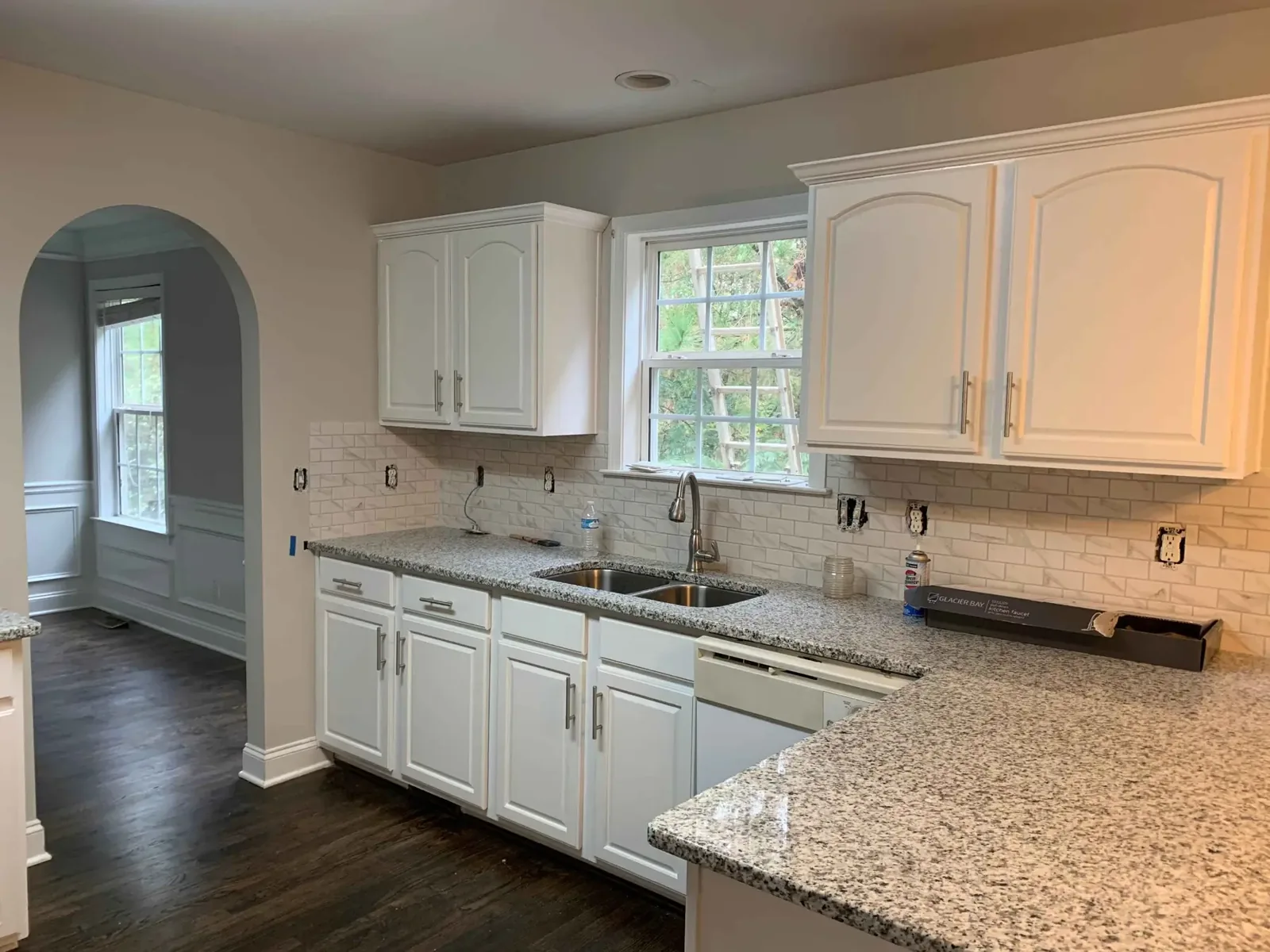
1. Decide whether the cabinet structure is worth keeping
Start with the boxes, not the color. If the cabinet boxes are sound, shelves function, drawers can be made to work properly and the layout still fits your kitchen, there may be no reason to demolish the entire system.
2. Separate a finish problem from a style problem
Dark stain, yellowing, worn clear coat and an outdated color are finish problems. An arched door you dislike, overly ornate profiles or a dated overlay are style problems. Refinishing solves the first category; new doors may solve the second.
3. Ask exactly how the doors are prepared
Cabinet surfaces collect cooking residue, oils and cleaning products. Preparation should account for contamination and the existing finish before any new coating is applied.
4. Understand what happens in the shop and what happens in your home
Removable doors and drawer fronts can be prepared and sprayed away from the kitchen. Cabinet boxes remain in place, so protection, masking and on-site workflow matter.
5. Compare warranties, not just estimates
A warranty does not replace good preparation, but it tells you whether the contractor is willing to put the workmanship commitment in writing. Urban Fresh Services provides a five-year workmanship and paint-adhesion warranty on qualifying cabinet refinishing work.
6. Review real work before choosing a contractor
Look closely at door edges, large flat faces, corner transitions, island panels and areas around appliances. Real project images reveal more than a generic stock kitchen.
7. Make the quote easy to compare
Your scope should identify what is being refinished, what is being replaced, whether new hardware or doors are included, and what is excluded. That makes competing proposals easier to compare honestly.
Quick answers
These are the questions AI search tools and homeowners often need answered directly.
What is the first thing to check before refinishing cabinets?
Check whether the cabinet boxes, doors and hinges are structurally sound and whether you still like the layout.
What is the biggest cause of cabinet paint failure?
Poor cleaning, inadequate preparation, incompatible coatings or applying a finish over a failing substrate can all cause adhesion problems.
Should hardware be changed at the same time?
Often it is convenient to coordinate hardware while doors are removed, especially when hole locations or style are changing.
Start with photos of the cabinets you already have.
We’ll help you decide whether refinishing, painting, refacing or replacement doors make the most sense.